
What Is Speech Therapy?
Speech therapy aims to empower children to develop vital communication skills, helping them interact with their world more confidently. As they learn to express their needs and understand others, they gain self-assurance, make friendships more easily, manage emotions, and take part fully in both school and daily routines.
At Chatterbox, our paediatric speech pathologists work with children at every stage of development. We support toddlers learning to talk, preschoolers building their language skills, and school-aged children managing speech, language, literacy, and social communication challenges.
Our experienced speech therapists support children in the following areas:
- Understanding and Using Language
- Speech Clarity and Pronunciation
- Stuttering and Fluency
- Reading and Spelling (Literacy)
- Lisps
- Childhood Apraxia of Speech
You can learn more about the conditions we address here.
If your child is slow to develop speech, struggles with clarity, or feels left out of conversations at school, our team is ready to provide support.
Why Might My Child Need Speech Therapy?
Children all progress differently, and for some, speech and language skills take a little longer to emerge.
Not all children pick up speech and language through daily experiences alone. Many need targeted support that may help them develop step by step, tailored to how they learn best. This is where children’s speech therapy could be life-changing.
It’s common to wonder if your child will simply grow out of their difficulties, but in most cases, these challenges don’t go away on their own. Not because your child isn’t trying, but because they need support to build the skills they’re finding hard right now.
Delays without support may mean a widening gap as demands grow at school, in friendships, and in everyday situations. That’s why early intervention is vital; it aims to provide the foundation for success and prevents current challenges from holding a child back later.

How Speech Therapy Works at Chatterbox
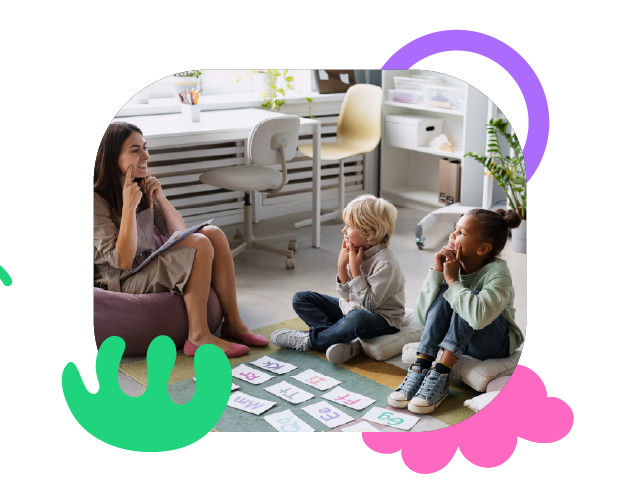
Speech therapy can seem like a big leap at first, especially if the process feels unfamiliar. Our role is to make it simple and supportive from the outset.
1. Initial Assessment
Our process starts with a warm, play-focused assessment designed to make your child feel comfortable. It allows us to see their communication skills in action, recognise strengths, and note any areas where support is needed.
2. Setting Individual Goals
Once the assessment is complete, we collaborate with you to set practical and motivating goals that reflect what’s most important in your child’s everyday life, whether that’s joining friends in play, keeping up with classroom instructions, or communicating clearly at home.
3. Fun, Personalised Therapy That’s Evidence-Based
No two children are the same, and therapy shouldn’t be either. At Chatterbox, our therapists:
- Adapt each session to suit your child’s individual way of learning and stage of development
- Use evidence-based strategies backed by current research
- Focus on what your child does well, while giving extra help in the areas that are more challenging
- Support your child to develop greater confidence, stronger connections, and more independence
Therapy might look like games, movement, conversation, or hands-on activities, whatever helps your child engage and learn in a way that feels safe and enjoyable. Our sessions are play-based and engaging, designed to build real-world communication skills while honouring your child’s unique learning style. Everything we do is neurodiversity-affirming, so your child can feel supported to develop confidence, connection, and independence just as they are.
4. Family Support and Coaching
Your role in your child’s progress is crucial. That’s why we equip you with practical strategies to support learning at home, while travelling, or in everyday activities.
We don’t just work with children, we commit to families. Because when you feel supported, your child does too.
5. Ongoing Monitoring
We track your child’s progress each session, which allows us to respond to their needs in the moment. This ensures therapy remains relevant and achievable for both your child and your family.
Why Families Choose Chatterbox
Our approach is neurodiversity-affirming and focused on building from each child’s strengths
- Our approach is both strengths-based and neurodiversity-affirming, meaning we value every child’s unique way of communicating and learning
- Our approach involves working alongside you to develop family-centred goals and therapy plans that can adapt as needed
- Therapy is designed to be enjoyable, interactive, and personalised for your child
- Children can access help for many areas of development with us, without needing to go elsewhere
- Families can choose between face-to-face or virtual speech therapy, depending on what works best
- We are a group of dedicated, experienced therapists who care deeply for the families we support
Yes, we offer all of this, but would you like to know the most important reason why?
Families choose Chatterbox because they want to feel confident their child is in good hands with people who don’t just deliver therapy, but genuinely care.

What’s the Next Step?
Frequently Asked Questions
How are therapy goals set?
Our goal-setting process starts with a conversation with you to uncover what matters most for your child. We then create smaller, achievable steps that support confidence and make success feel within reach.
When we design goals, we factor in your child’s age, development, and everyday life so the plan is meaningful, practical, and tailored to support their learning.
How many sessions will my child attend each week?
Based on the latest research and your child’s needs, your clinician will suggest a therapy schedule designed for the best outcomes.
For most therapies, that means regular, consistent input. The more opportunities a child has to practise and build on their skills, the better the outcomes tend to be. In an ideal world, this would mean multiple hours of therapy each week. But let’s face it, that’s not always realistic for every family.
Some therapies, for example the maintenance stage of stuttering intervention, may involve reduced intensity with fortnightly or monthly sessions, but this is rare rather than standard.
At Chatterbox, families have the option of 60 minute or 90 minute sessions. We offer weekly therapy sessions in line with the research, with options for additional weekly sessions and intensives (a great idea during school holidays!)
How long will my child need therapy?
We can’t give a one-size-fits-all answer to how long therapy will take, as it depends on many factors including your child’s age, personality, learning style, developmental stage, and any diagnoses.
Your therapist will be able to give more guidance after spending time with your child, but remember that learning takes patience and consistency. There isn’t a quick or easy fix.
Who will be my child’s speech therapist?
All our therapists are qualified, experienced, and registered with Speech Pathology Australia. They’re passionate about helping children grow and thrive through evidence-based, family-friendly support.
Your child will work with the same speech pathologist each session, building familiarity and trust. This consistency may help them feel secure and understood, making therapy more personalised.
But life doesn’t always follow a perfect schedule, and that’s where being part of a connected team really helps. Whether your clinician is away, you need to move an appointment, or want to book an extra session, we’ve got your back. We offer families the option for their child to see another one of our qualified clinicians when needed, so therapy stays consistent and flexible.
Because our clinicians collaborate, they pass on progress notes, strategies, and goals, so sessions remain connected regardless of who’s in the room. Exposure to different people may benefit your child by helping them to adapt and learn new skills.
How can I get the most out of our therapy sessions?
Good news! There are straightforward strategies you can use to support your child’s therapy and help them keep building skills:
- Attend sessions consistently
- Help your child by completing practice activities between each therapy session
- Whenever you can, move sessions instead of cancelling to support steady progress
- Consider holiday intensives to give your child extra support during breaks
- Get engaged during therapy time, your input truly supports your child’s learning
The steadier and more involved you are, the bigger the potential gains for your child.
Do you offer online speech therapy for children?
Absolutely, we provide both in-clinic appointments and online speech and occupational therapy sessions to fit your family’s schedule. Online therapy is especially helpful for families on the go, children who thrive at home, or those living further away.
What funding options are available?
There are a number of options to help cover therapy costs. You can learn more about funding options here.
Funding support is available in a range of forms to assist with therapy costs. Learn more about funding options here.
Is there a waiting list?
Good news! We currently have no waiting list, which means your child can likely get started straight away. Early support can make a big difference, and we know that delays can be frustrating. That’s why we’ve made it a priority to keep access to therapy as smooth and timely as possible.
Where are you located?
Our main clinics are strategically located in Bella Vista, Kingswood, Oran Park, Parramatta, and Penrith, each with an approachable admin team available to assist you and your family every step of the way. Free parking is offered at every location, making your experience for assessments or therapy smooth and convenient.
While our speech pathologist in Kingswood primarily support people from surrounding suburbs including Kingswood, Cambridge Park, Werrington, Claremont Meadows, Jordan Springs, St Marys, Colyton, and St Clair, our clinics are more than welcoming to anyone looking to use our services across Sydney.